
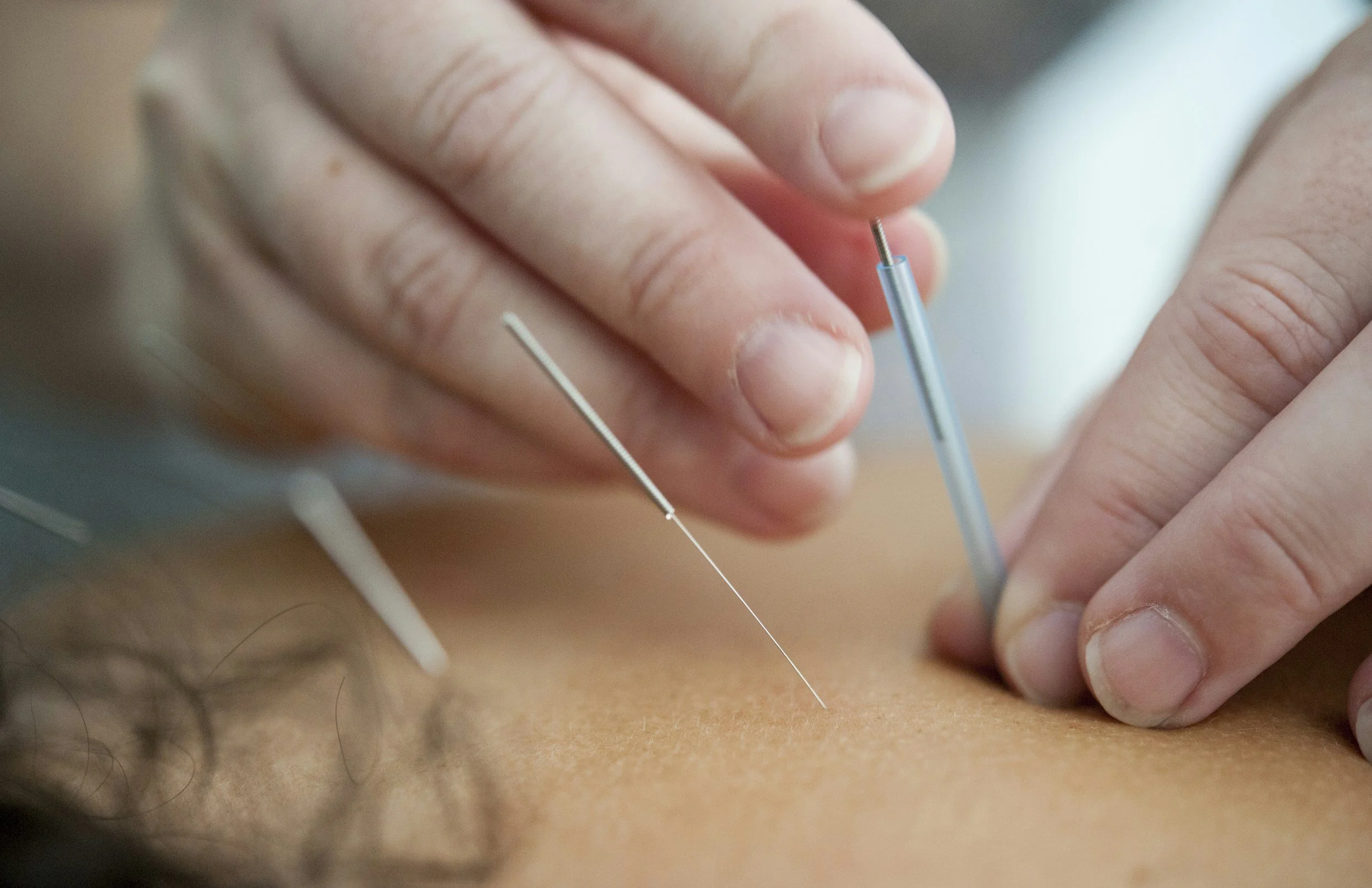
If you've ever been recommended dry needling as part of your osteopathic treatment, you've probably wondered exactly what it is, and what those tiny needles are actually doing.
Dry needling is a technique used by many osteopaths to help reduce pain, improve movement and assist recovery from musculoskeletal conditions. Despite its name, no medication or fluid is injected ("dry" simply means the needle contains nothing).
Rather than treating the needle itself as the therapy, we use dry needling as one tool within a comprehensive treatment plan that may also include hands-on therapy, exercise, movement education and advice.
How Does Dry Needling Work?
Dry needling works through several mechanisms that help reduce pain, improve movement and support recovery. While researchers are still learning exactly how these processes interact, there are three key ways dry needling is thought to work.
1. It Helps Relax Tight Muscles
When a needle is inserted into a tight muscle or trigger point, it may produce a brief involuntary muscle twitch known as a local twitch response.
This response is thought to reduce excessive muscle activity, allowing the muscle to relax and move more normally.
2. It Helps Reduce Pain
Dry needling stimulates receptors within muscles and connective tissue, activating the body's natural pain-modulating systems. This can reduce pain sensitivity both at the treatment site and in surrounding areas.
Many people notice an improvement immediately after treatment, while others experience gradual relief over the next 24-48 hours.
3. It Supports Recovery and Movement
By improving local blood flow and reducing muscle tension, dry needling can help create an environment that supports the body's natural healing processes. As pain decreases and muscles function more normally, movement often becomes easier, making rehabilitation exercises more effective.
Common conditions where dry needling may be used include:
Neck and jaw pain
Shoulder pain
Back pain
Tension and cervicogenic headaches
Tennis elbow
Hip and gluteal pain
Muscle strains
Calf tightness
Plantar heel pain
Sports injuries
Persistent muscle tightness or trigger points
Dry Needling vs Acupuncture:
What's the Difference?
Although both techniques use very similar sterile, single-use needles, they are based on different treatment philosophies.
Dry Needling
Based on modern anatomy, neuroscience and musculoskeletal medicine
Targets muscles, trigger points and connective tissue
Aims to reduce pain, improve muscle function and restore movement
Commonly used by osteopaths, physiotherapists and other musculoskeletal clinicians
Acupuncture
Based on Traditional Chinese Medicine principles
Targets acupuncture points along traditional meridians
Aims to restore balance of the body's energy ("Qi") according to Traditional Chinese Medicine
Performed by trained acupuncture practitioners and some other health professionals
While the needles may look identical, the assessment, reasoning and treatment goals are different.
Is Dry Needling Right for You?
Dry needling isn't a standalone treatment, nor is it necessary for every injury.
At our clinic, we use it when we believe it will complement your overall treatment plan and help you recover more efficiently. Your osteopath will always discuss the expected benefits, possible side effects and whether it's the right option for your individual presentation.
If you have questions about dry needling or would like to know whether it may help your condition, we're always happy to discuss it during your consultation.
References
https://my.clevelandclinic.org/health/treatments/16542-dry-needling
https://www.optimalhealthlab.com.au/blogs/optimal-tips/understanding-dry-needling
https://australian.physio/inmotion/acupuncture-and-dry-needling-musculoskeletal-pain
